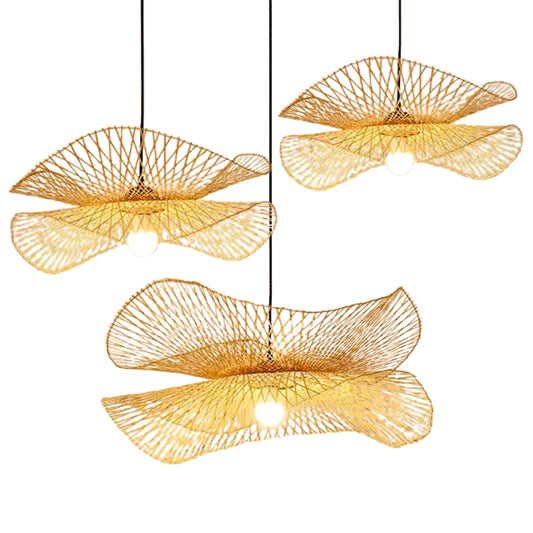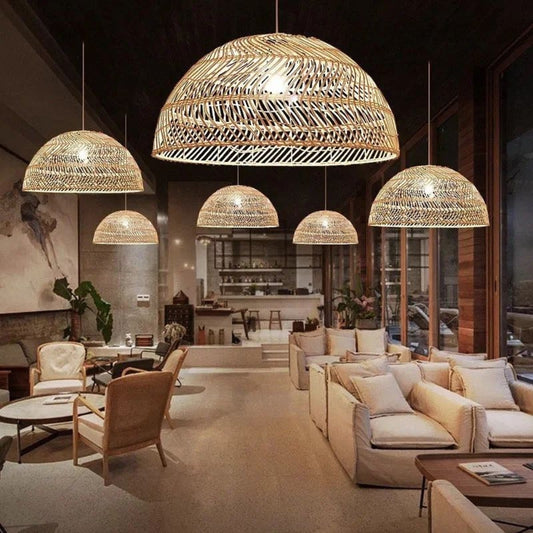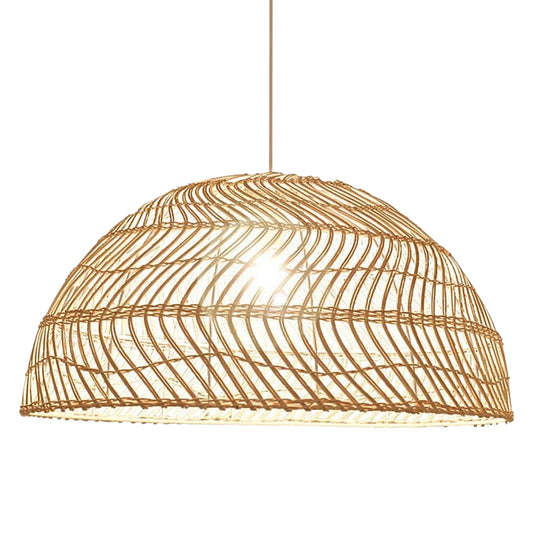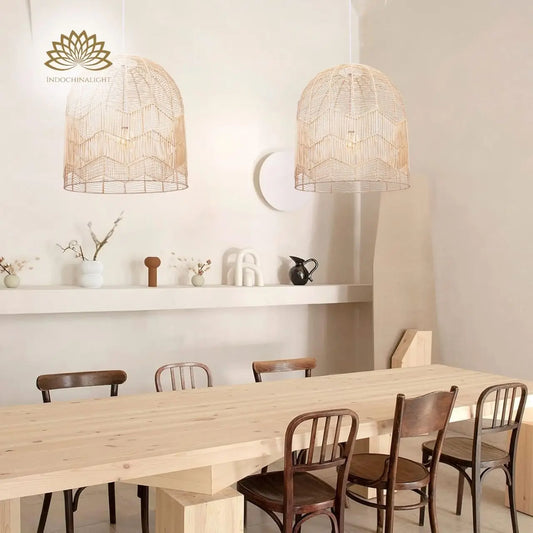
Hallways typically suffer from three design flaws: widths too narrow for standard pendants, ceilings too low to clear headroom, and far ends that natural light never reaches. This guide sorts 22 lighting ideas by the actual problem your hallway has, not by trend, grouped into eight situations: narrow, low-ceiling, dark, long, small or outlet-free, wide, foyer, and upstairs landing.
The numbers that actually matter, including hanging clearance, sconce depth, fixture spacing, and bulb color, sit in one quick-reference section near the end, so the picture list stays easy to skim. Find your hallway in the table below, then jump straight to that group.
Which Hallway Lighting Problem Are You Solving?
The right hallway light comes down to its shape, not what looks good in a magazine. People often ask what the "best" hallway light is; the honest answer is that there are eight different best answers, one for each hallway type.
| If your hallway is… | Start with… |
|---|---|
| Narrow (under 4 ft wide) | Wall-mounted light or a ceiling fixture that throws light sideways |
| Low ceiling (under 8 ft) | Flush or semi-flush mount, not long-drop pendants |
| Dark, no window | Several sources along the length, with light bounced off the ceiling |
| Long (over 15 ft) | Repeated fixtures at even intervals, not one central light |
| Wide (over 8 ft) | Grand chandelier, paired wall sconces, or linear recessed LED |
| Small entry, no ceiling box | One statement fixture or plug-in wall lights |
| Foyer, entry hall | One fixture scaled to the room, hung to be visible on entry |
| Upstairs landing, stairwell | A fixture readable from two levels, plus low light on treads |
22 Hallway Lighting Ideas for Every Hallway Shape and Size
The 22 ideas below follow the same eight groups as the table above, in the same order. Read only the group that matches your hallway; the list is built so you can skip around without losing context.
1. Slim Wall Sconces Mounted Down One Side of a Narrow Hallway
A ceiling fixture hanging into a tight hallway is the fastest way to make it feel tighter. Wall sconces solve that because they sit flush against the wall, so you don't lose light or walking room. Mount them down just one side and leave the opposite wall bare, and a disc-shaped sconce at the far end throws a soft pool of light that carries you to the end of the hall.
For a longer stretch, alternate the sconces from one wall to the other as you go. That zigzag gives the corridor a rhythm instead of a straight line of matching lights, so walking through feels more like a stroll than a march.
Styling tip: alternate sides down a long hallway; one straight line of lights reads as a runway, while a zigzag reads as design.

Slim cylinder sconces line one wall of a narrow hallway
2. Multi-Directional Ceiling Fixtures That Push Light Sideways
Point a fixture straight down in a narrow hall and you light the floor, not the walls, and dark walls read as a tighter hallway. Interior designer Niki Wright of Lights and Lamps recommends the opposite: aim the light outward and up, since a bright wall reads as a wall set further back. A clear-glass sputnik fixture does this well, throwing light in every direction at once and opening up even a plain white corridor.
Pair it with a pale ceiling rather than a dark one, since the bounce only works if the surface reflects instead of absorbing.
Styling tip: a light-colored ceiling does half the work here, while glossy paint or a dark tone kills the effect.

Woven flush mounts with globe bulbs light a bright hallway
3. Semi-Flush Globe Clusters for a Narrow Corridor
Narrow doesn't have to mean plain, but a full chandelier eats too much headroom to work here. A cluster of glass globes mounted semi-flush keeps the decorative weight close to the ceiling, while several small light sources replace the one hot spot a single fixture would leave.
Smoked glass against a white wall gives a hallway a settled, put-together look, and two matching clusters spaced down the length beat one oversized fixture in the middle, since the light stays even and the ceiling never gets crowded.
Styling tip: repeat the same cluster rather than sizing up. Two small moments read better than one big one in a narrow hall.

Woven globe clusters mounted semi-flush in a narrow corridor
4. Wall-Mounted Picture Lights Above a Narrow Gallery Wall
Narrow hallways collect the family photos nobody has room for elsewhere, and then stay too dark to actually see them. Slim picture lights mount above the frame and aim down at eye level, adding a second, lower layer of light without touching the floor or ceiling.
A couple of dark, minimal bars over a display shelf can make a plain wall feel curated rather than just hung with frames, as long as every fixture matches, because mismatched picture lights make even good art look like an afterthought.
If height is your hallway's problem rather than width, the next four ideas are for you.

Slim picture lights illuminate framed art in a gallery hallway
5. Textured Glass Flush Mounts Repeated Down a Low Ceiling
A flat flush mount under a low ceiling does the job and looks like it did nothing else. Faceted or ribbed glass breaks the light into a pattern, so the fixture stays tight to the ceiling but still has presence, and two smaller mounts spread that presence down the hall instead of concentrating it in one spot. Ribbed glass with a brass collar throws a warm, textured glow that makes a low ceiling read as a choice rather than a limitation.
Styling tip: two smaller flush mounts almost always beat one large one when the ceiling is low.

Woven flush mounts repeated down a low hallway ceiling
6. Shallow Dome Ceiling Lights for Hallways Under Eight Feet
Most fixture photos online assume a ceiling with a few spare inches; a hallway under eight feet doesn't have any. A shallow dome fixture sits nearly flush against the plaster and spreads its light across a wide arc instead of dropping it straight down, so the ceiling stays the top of the room rather than something you dodge.
Go wider and flatter over small, deep spaces, since a broad dome throws light farther at the same wattage. Finish with an opal or frosted shade and the glow reads soft instead of harsh.
Styling tip: width beats depth for a dome in a low hallway; the flatter, wider option wins almost every time.

Shallow woven dome fixtures fit a low hallway ceiling
7. Recessed Downlights for a Clean, Uninterrupted Ceiling Line
Some low hallways can't take a hanging fixture at all: a swinging door, a sloped ceiling, or a corner too tight to work around rules it out. Recessed lights sit inside the ceiling instead, so the surface stays unbroken.
Designer Andrea Schumacher points to adjustable gimbal trims here: aim them at the walls, not straight down, and you keep light off people's faces while still brightening the room. Space them evenly and the wall wash does more than tidy the ceiling; it can make a low hallway read taller than it actually is.
When the problem isn't shape but a total lack of daylight, the next three ideas apply.

Recessed downlights keep a formal entry ceiling unbroken
8. A Row of Ceiling Lights to Wash a Windowless Hallway
A windowless hallway usually runs on one central light, which means a bright middle and two dim ends. Space several matching fixtures at even intervals instead, and that falloff disappears, since light arrives from multiple points and there's no single gradient reading as gloom.
Picture three small glass globes lining a ceiling beam, evenly spaced, all warm-toned. Put the whole row on one dimmer and you can lift or lower the entire hallway with a single switch instead of hunting for the right combination.

A row of matching flush mounts washes a windowless hallway
9. Uplighting That Bounces Off the Ceiling in a Dark Hallway
Light aimed down in a windowless hall brightens the floor and leaves the top half in shadow, which is exactly what makes a hallway feel like a tunnel. Send the light up instead and the ceiling becomes a large, soft reflector, brightening the whole volume of the space rather than just the floor underfoot. It only works on the right surface, though: a flat, pale ceiling bounces the light evenly, while a dark or glossy one either absorbs it or throws back a hard glare. Get that right and even a dark, wood-paneled corner can open up.
Styling tip: check the ceiling finish before you commit; matte and pale is what makes uplighting actually work.

A woven pendant bounces warm light off a dark hallway ceiling
10. Warm-Toned Lantern Pendants for a Dark Entry Hall
Cold light in a windowless entry can make a home feel more like a building lobby than somewhere you'd want to linger. A glazed lantern pendant with a warm bulb behind the glass softens that instantly, since the source stays visible but the light itself is gentle rather than clinical. Hang it where people actually stop, right by the door where bags come off and shoes come on, not halfway down the corridor. A classic framed lantern over an entryway table throws a golden pool across the floor below that says "come in" better than any brighter fixture would.
For hallways where distance is the problem rather than darkness, the next three ideas help.

A woven lantern pendant warms a dark entry hall by the door
11. Repeated Pendant Lights Spaced Along a Long Hallway
One pendant in the middle of a long hallway lights the middle third and leaves the rest to fend for itself. Matching pendants spaced evenly down the whole length fix that, and designer Betsy Wentz notes that this kind of repetition does something extra: it makes the space read as grander than it is, because the eye has something to follow all the way down.
Three glass globe pendants hung at exactly the same height down an open stairwell read as intentional; hang them even slightly uneven and that same row starts to look like a mistake instead of a plan.
Styling tip: match the height across every pendant. An uneven line is more noticeable than an uneven pattern anywhere else in the house.

Matching woven pendants spaced evenly down a long hallway
12. A Chain of Chandeliers Down a Long Formal Hallway
A long, formal hallway needs more presence than a string of plain fixtures can give it, but no single chandelier covers that much ground alone. Repeat the same tiered chandelier through each archway instead, and the hall breaks into a sequence of lit rooms rather than one long corridor straining under one light.
Let the architecture set the spacing: line each fixture up with a doorway, an arch, or a change in flooring, and the eye follows lines that were already there instead of noticing lights dropped in at random.

Woven pendants repeated through each archway of a long hall
13. Cage Pendants Hung in Sequence for an Industrial Long Hall
An industrial hallway with exposed brick or steel doesn't need lighting that tries to soften it; a decorative shade just looks borrowed. Open cage pendants leave the bulb visible and cast hard, patterned shadows that match the surrounding brick's material vocabulary. Hung in sequence, they mark out the length of the hall the way the beams already do.
The cord matters as much as the fixture here: a colored fabric cable running along bare brick becomes part of the design, not something to hide.

Open cage pendants with red cords line an industrial hallway
For the smallest halls, and the ones with no ceiling box to work with, the last three ideas cover it.
14. A Single Statement Pendant in a Small Entry Hall
In a small entry, the instinct is to pick a small light, and that's usually the mistake; a tiny fixture makes the space look unfinished and no brighter. One deliberately oversized pendant does the opposite: it gives a small entry a focal point and enough output to light it from a single source, and because there's no competing furniture, the fixture gets to carry the room by itself. Designer Kevin Isbell puts it plainly: most people size down when they should size up.
Hang it centered on the door, where you'll actually see it as you walk in, not centered on the floor plan. A glowing opal globe against the door glazing pulls the whole entry together.

An oversized woven globe pendant anchors a small entry hall
15. Plug-In Wall Lights for Hallways With No Ceiling Box
Plenty of hallways were never wired for a ceiling fixture, and an electrician isn't always in the budget. Plug-in sconces paired with a small console table solve that without touching the wiring at all: GE Lighting notes that plug-in fixtures give you more layout freedom than anything hardwired, since you're not locked into wherever the box happens to be.
The cord is the only tell, and it's an easy one to hide. Run it through a paintable cord cover that matches the wall, and a pair of gooseneck sconces over a coat rack reads as planned, not improvised.

Plug-in gooseneck sconces light a hallway with no ceiling box
16. An Alcove Pendant to Light a Dead-End Hallway Corner
Most hallways end somewhere, whether it's an alcove, a blank wall, or a turn, and that endpoint is usually the darkest spot in the house. Hang a small pendant right in that nook and it becomes a destination instead of a dead end; lighting the far point pulls the eye down the hall, which makes the whole corridor read as longer and more deliberate. Treat the alcove like its own tiny room: one light source, one object, nothing else competing for attention. A plain drum shade glowing against a paneled backdrop is usually all it needs.
Styling tip: resist adding more than one object to the alcove. The pendant should be the only thing doing the talking.

A single pendant lights a dead-end hallway alcove
17. A Grand Chandelier Centered in a Wide Hallway
Light a wide hallway the same way you'd light a narrow one and the space just reads as empty; a small flush mount in a generous hall looks like an afterthought, not a choice. Width is the one dimension that gives you permission to go big. Homes & Gardens points to the entrance hall or the stairwell as the natural spot for an oversized chandelier, somewhere it can fill the volume and actually throw light across the room instead of getting lost in it.
Center it on the width of the hallway itself, not on the front door: the two rarely line up, and getting this wrong is the easiest way to make an expensive fixture look off-balance.

A grand crystal chandelier centered in a wide entry hall
18. Paired Wall Sconces Facing Each Other Across a Wide Hall
One overhead fixture in a wide hallway lights the middle of the floor and leaves both side walls, the surfaces people actually look at, in shadow. Sconces mounted in facing pairs put light on both walls at once, using the extra width instead of fighting it. What makes this work is the symmetry: matched sconces at identical heights cast balanced pools of light that frame the hallway instead of just adding brightness to it.
Where the wide space is the entry itself, the next two ideas apply.

Paired wall sconces face each other across a wide hallway
19. A Tiered Chandelier for a Double-Height Foyer
A double-height foyer has a whole tall band of empty air above head height, and a flat ceiling fixture leaves that entire middle zone dark. Drop a fixture on a long chain instead, so it sits in the middle of the volume rather than at the top of it: the height reads as one lit room instead of a bright ceiling floating over a dim floor.
It's worth remembering the fixture gets seen from two angles here, ground floor and landing both, so hang it with the base just below the upstairs handrail line. A glass lantern on a long chain, seen from both levels at once, does more for a stairwell than almost anything else on this list.

A tiered woven chandelier drops through a double-height foyer
20. A Woven Globe Pendant for a Relaxed Modern Foyer
Not every entry wants a formal chandelier: crystal at the front door can set a tone the rest of a modern home doesn't keep. A large woven globe carries the same scale and focal weight in a softer material, and the open weave throws patterned shadows across the surrounding walls instead of one hard pool on the floor.
It also gives you more room to hang lower than glass would allow, since the weave blocks the bulb from most angles without you noticing. A honey-toned rattan globe at a comfortable eye level does exactly this.

A large woven globe pendant hangs low in a modern foyer
At the top of those stairs, the landing needs its own plan; the last two ideas cover it.
21. Matching Lanterns Repeated Along an Upstairs Landing
Upstairs landings usually get one light near the stairs and nothing past it, leaving the run toward the bedroom doors dark. Repeat matching lanterns down the landing instead and it becomes its own hallway rather than an afterthought attached to the stairs.
It only reads as one connected floor if the landing fixtures match whatever's hanging over the stairwell: two evenly spaced lanterns down the upper hall, in the same style as the light below, carries the eye the whole way instead of stopping at the top step.

Matching woven lanterns repeated along an upstairs landing
22. An Oversized Pendant Hung Through a Stairwell Void
The stairwell void is usually the tallest space in the house and the one most often left with a single fixture pinned to the top, doing nothing for the floors below. Drop one oversized pendant through the void instead and it gets read from every level it passes: one fixture doing the work of three. Keep the shape simple, since a plain silhouette is what keeps a long drop from looking heavy. Hang it off to the side of the stair flight, not over the treads, so nobody ends up ducking a light fixture on their way up. A cascade of clear glass globes running down a spiral stairwell reads as clean and deliberate rather than crowded.

Glass globes cascade through a spiral stairwell void
How Do You Choose the Right Hallway Light?
Four numbers decide whether a hallway fixture actually works: hanging clearance, sconce depth, spacing along the length, and bulb warmth. Clearance comes first; once you know how low a fixture can safely hang, everything else gets easier to pick.
| Decision | Rule of thumb | Why it holds |
|---|---|---|
| Hanging clearance | 7 ft (2.1 m) minimum, floor to the bottom of the fixture | Standard interior doors sit around 7 ft, so anything hanging above that line clears both people and door swings (Livingetc). |
| Sconce projection | 4 in (10 cm) max from the wall in a narrow hall | A deeper fixture catches shoulders and bags in a corridor people actually brush past (Livingetc). |
| Ceiling height | Under 8 ft (2.4 m), flush or semi-flush only | Below that line, a dropped pendant sits in head space instead of decorating above it (Livingetc). |
| Spacing in a long hall | One fixture every few feet, not one in the center | Repetition removes the bright-middle, dark-ends problem entirely (Livingetc). |
| Bulb color | Warm white; skip cold LED | Warm light reads as welcoming in a space you pass through; cool light reads institutional (Homes & Gardens). |
| Width for a statement fixture | Over 8 ft (2.4 m) wide can carry a large chandelier or oversized pendant; scale down below that | This is the line between a focal point and an obstacle (GE Lighting). |
Going bigger is usually the safer mistake in a hallway. Designers say most people pick fixtures too small for the space: Kevin Isbell has used a 48-inch (122 cm) paper shade in a hallway and made it work, and in a double-height space a drop up to 3 ft (0.9 m) still reads fine. Width has more give than length, so go wider before you go longer.
Put the whole setup on a dimmer. A hallway rarely needs full brightness, and dimming is the difference between a corridor and a runway. Designers suggest wiring for at least 180 watts of dimmer capacity, so there's room to turn things up when you actually need it, and check for vents, speakers, or access panels before you drill anything.
5 Hallway Lighting Mistakes to Avoid
These are the mistakes designers who light hallways for a living see most often:
- Relying on one central fixture: A single ceiling light gives you a bright middle and two dark ends; a pendant at the start of the hall only does its job in that one spot. Add wall lights along the run to even things out (Pooky; Real Homes, Peter Bowles of Davey Lighting).
- Lighting it like a runway: Hallways don't need full brightness around the clock. Without a dimmer, the corridor ends up brighter than the rooms it connects (Livingetc, Kevin Isbell).
- Buying the fixture before measuring the ceiling: Under 8 ft (2.4 m), a long pendant or chandelier is the wrong category, not just the wrong size, no matter how good it looked online (Livingetc, Lara Hadad).
- Cold bulbs in a space meant to feel warm: Warm white is what makes an entryway feel like home instead of a hallway in an office building (Homes & Gardens, Natalie Mann).
- Forgetting where the switches go: Put one at each end of the hallway and near the stairs, so nobody has to cross a dark hallway just to turn a light on (Real Homes, Charlie Bowles of Davey Lighting).
Frequently Asked Questions About Hallway Lighting
What Is the Best Lighting for a Hallway?
Layered light works best: a ceiling fixture paired with wall sconces, rather than one single source. The right combination depends on your hallway's width and ceiling height.
What Kind of Lights Are Good for Hallways?
Flush and semi-flush mounts for low ceilings, wall sconces for narrow spaces, repeated pendants down long halls, and recessed lights where you need a clean ceiling.
What Are the Latest Trends in Hallway Lighting?
Oversized statement pieces in small entryways, matching fixture sets spaced down long hallways, and warm dimmable LEDs taking over from single harsh overhead bulbs.
What Are Some Common Hallway Lighting Mistakes?
Relying on one overhead bulb, skipping the dimmer, hanging a pendant under an 8-foot (2.4 m) ceiling, and choosing cold white light over warm.
Conclusion
Whatever problem your hallway started with, too tight, too low, too dim, too long, the right fixture is what actually fixes it, not just a good-looking one.
For the ideas here where a warm, textured fixture fits, from a semi-flush in a narrow corridor to a statement piece in a small entry, Indochina Light handweaves rattan and bamboo options built for exactly this kind of space. The weave filters light rather than throwing it in one direction, which is part of why it works in a hallway, a room people pass through, not one they sit in.
Browse the full rattan pendant light collection to find the piece that fits yours.
IndochinaLight - IndochinaHomeDecor LLC
-
Address: 30 N Gould St Ste. N, Sheridan, WY 82801
-
Phone: (+1) 307 249 0594
-
Email: service@indochinalight.com