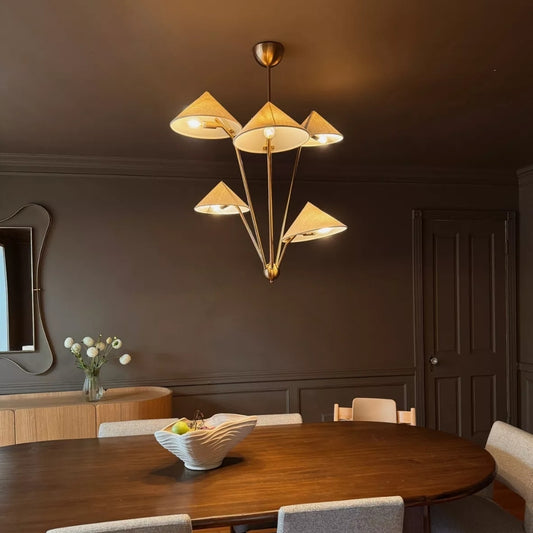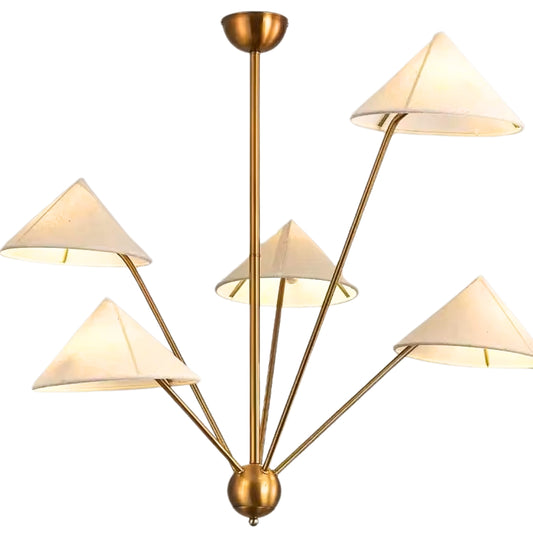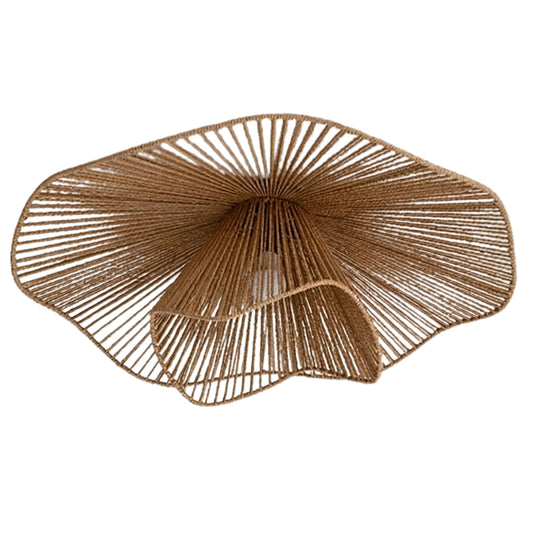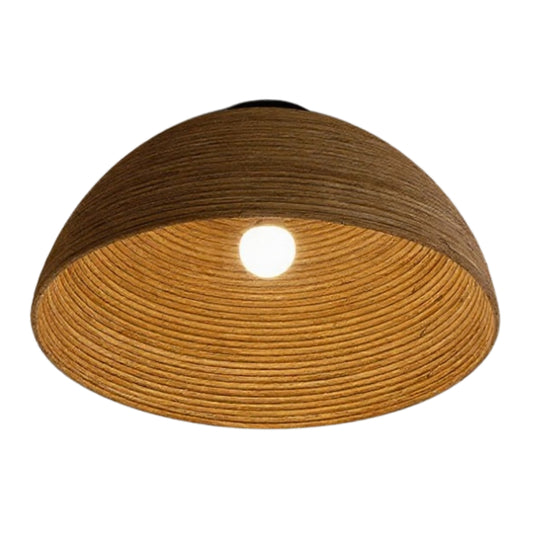
A lounge ceiling light does more than illuminate a room; it defines how tall your ceiling feels, anchors your central seating area, and determines whether your living room feels warm and inviting or flat and clinical after dark. Most homeowners treat overhead lighting as an afterthought, choosing it long after the sofa and paint colors are locked in, yet it forms the foundation of your space's visual architecture.
Getting this central fixture right pulls the seating zone together with comfortable warmth. Getting it wrong can make even a well-furnished space feel washed out. This guide walks you through 24 field-tested ceiling light ideas grouped by function, style, and finish, followed by 4 deliberate styling rules, precise sizing and hanging formulas, and direct answers to common installation questions.
Define Boundaries with Invisible Light
Install perimeter cove lighting or recessed LED channels to define functional zones in an open-plan lounge without adding physical partitions. Tucking the light source inside a ceiling soffit or architectural cove washes the floor in a warm, indirect glow while keeping the ceiling plane visually uncluttered. The illumination outlines your seating area much like an area rug, separating the lounge from adjacent circulation paths.
Run the fixture directly along the perimeter of your seating group rather than spacing channels evenly across the ceiling. The contrast between the illuminated floor and the dimmer surrounding perimeter creates a distinct spatial edge that anchors the entire room.

Hidden perimeter lighting defines luxurious wooden ceiling coffers.
Layer Light for Visual Depth
Layer your ceiling fixture with floor and wall lighting to create visual depth across the room. A single overhead fixture washes every surface in uniform brightness, flattening architectural details and dulling rich furniture textures. Use your ceiling light for general ambient fill, then introduce an eye-level floor lamp beside the sofa and a low-glare wall sconce to cast soft directional shadows.
Wire each lighting layer to its own switch or dimmer control. Separating your ambient, task, and accent fixtures lets you shift the room from a functional family gathering space to an intimate evening retreat in seconds.

Candle chandelier combined with table lamps in a spacious lounge.
Anchor the Room with Soft Texture
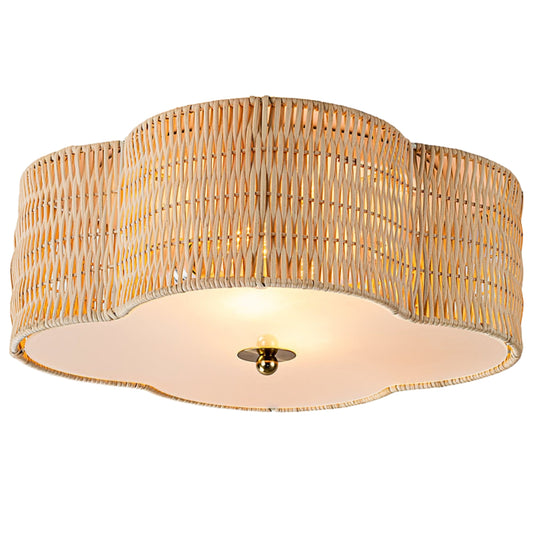
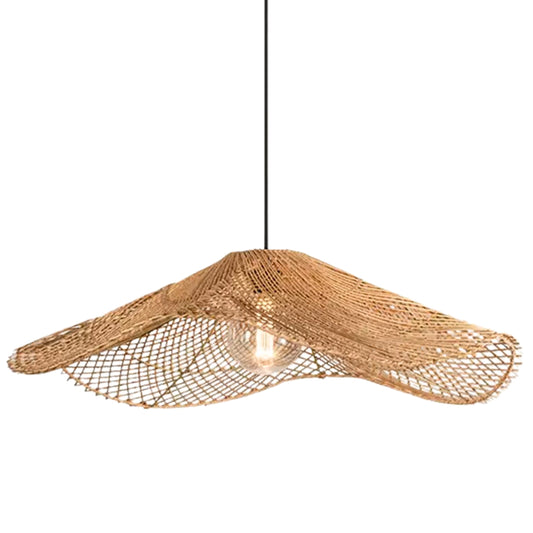
Hang a woven natural-fiber drum pendant to add tactile warmth and eliminate harsh bare-bulb glare. An open-weave rattan or fabric shade filters direct illumination through its sidewalls, projecting dappled light and soft shadows across the ceiling and surrounding walls. The organic surface softens clinical drywall finishes while diffusing a warm, welcoming glow over your central seating area.
This fixture pairs naturally with coastal, Japandi, and warm minimalist interiors that incorporate linen upholstery and light wood tones. Center a single woven drum pendant directly above your coffee table to create a balanced focal point that reads clearly from every angle.
A spacious lounge requires a central lighting piece with enough visual presence to anchor large sectional sofas and low coffee tables. Wide-diameter rattan drum light fixtures deliver a grounded, architectural focal point, diffusing glare-free ambient warmth that invites casual conversation during evening gatherings.

A large woven rattan pendant centers a cozy, neutral living room.
Maximize Height with Flush Drums
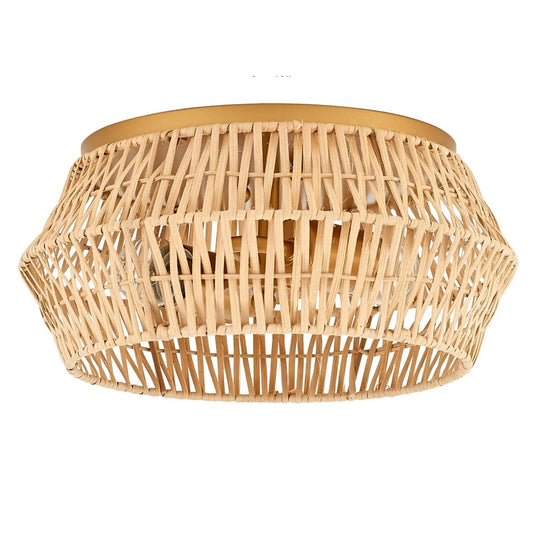
Mount a wide flush or semi-flush drum fixture to maximize usable headroom under low ceilings. In lounges with standard or low ceiling heights, hanging pendants eat up vertical clearance you cannot spare. A low-profile drum mount hugs the ceiling drywall, opening up sightlines across the room while distributing a broad wash of lateral light across your walls and floor.
Choose a drum profile that is wider than it is deep. A shallow, broad shade pushes light outward toward the room's perimeter, brightening upper corners and making the ceiling appear taller than it is.

Flush drum ceiling light opening up a bright fireplace seating.
Soften Corners with Circular Glows
Choose an opal or white glass globe fixture to eliminate hard shadow lines and soften angular architecture. A frosted glass sphere diffuses light omnidirectionally in a full 360-degree sweep, preventing the harsh cutoff lines and glare produced by clear glass shades or exposed bulbs. The even, ambient wash illuminates both ceiling and floor surfaces with a gentle tone reminiscent of diffused daylight.
This spherical form provides essential visual contrast in square, boxy lounges dominated by linear sofas and rectangular tables. Suspend a single globe pendant or a balanced cluster directly over your central coffee table to break up rigid geometric planes.

A glowing globe chandelier and shelf light soften cozy corners.
Create Drama with Sculptural Forms
Install an asymmetrical branching chandelier to establish a dynamic sculptural centerpiece overhead. A multi-arm fixture with radiating brass or matte black arms functions as architectural art, drawing the eye upward before visitors even register the furniture below. Sputnik silhouettes, organic branching limbs, and geometric cages define the room with strong graphic presence.
These expansive chandeliers require sufficient ceiling height and visual breathing room to avoid overwhelming the space. Position the fixture directly over your main sofa arrangement in mid-century modern or eclectic rooms, keeping secondary table lamps minimal so the overhead sculpture commands attention.

Striking multi-arm chandelier above modern sculptural living room furniture.
Merge Cooling with Sleek Design
When designing a low-stimulus lounge area for quiet evenings, choosing gentle wabi sabi pendant lighting provides ambient warmth that blends seamlessly into minimalist surroundings.
Select a modern ceiling fan with an integrated LED light kit to combine airflow and illumination at a single junction box. Mounting separate fan and lighting fixtures on the same ceiling plane creates visual clutter and forces competing hardware into tight quarters. An integrated low-profile fan satisfies both climate and lighting needs through one streamlined hub, preserving a clean ceiling surface.
Coordinate the blade finish with your ceiling paint. Matching white blades to a white ceiling lets the fan assembly visually recede when idle, keeping your living room's architectural lines quiet and uncluttered.

Minimalist ceiling fan cooling a curved sunlit lounge.
Elevate the Space with Glass Accents
Opt for clear or smoked glass pendant lights to introduce luminous reflections and visual lightness. A transparent or lightly tinted glass shade leaves the warm bulb filament visible, casting crisp, sparkling light reflections onto adjacent walls and polished surfaces. The reflective glass envelope catches natural daylight even when switched off, enlivening the room throughout the morning and afternoon.
Glass fixtures integrate seamlessly into transitional and contemporary lounges heavy with dense wood, stone, or woven textiles. Suspend a single large glass pendant or a staggered pair above your seating group to inject transparent elegance that balances heavier furnishings.

Amber glass globe pendant highlighting an airy white living room.
Frame the Space with Crystal and Lines
Pair precision-cut crystals with a horizontal linear frame for modern sophistication without traditional formality. Suspending faceted crystals from a clean, geometric metal bar splits single-source light into hundreds of shimmering refractions while avoiding the heavy, ornate tiers of antique chandeliers. You achieve refined elegance anchored by clean contemporary lines.
This tailored design suits transitional and modern glam living rooms designed for entertaining. Position the linear crystal fixture above your primary seating arrangement to reflect dazzling light across nearby glass tabletops, wall mirrors, and lacquered surfaces.

A circular crystal chandelier anchors a modern black-and-white living space.
Guide the Eye with Linear Channels
Suspend a linear pendant fixture along the room's major axis to balance illumination across an elongated lounge. A single central fixture in a narrow or rectangular living room leaves both ends trapped in deep shadow, regardless of bulb wattage. A linear suspension bar distributes light evenly from end to end, visually extending the room while providing balanced coverage across the entire seating zone.
Align the fixture with the front edge of your sofa arrangement rather than centering it on the bare ceiling drywall. Anchoring the light directly over your furniture grouping keeps the visual focus centered where guests actually gather.

Layered crystal chandelier paired with vertical sconces on olive walls.
Interlock Rings for Modern Flow
Choose an interlocking ring chandelier to introduce continuous geometric motion across your ceiling plane. Stacking multiple illuminated rings at intersecting angles creates a kinetic sculpture that appears to transform as you move through the lounge. The overlapping bands cast layered halos of light, delivering architectural interest that static, flat fixtures cannot match.
Interlocking ring fixtures require generous ceiling clearance so you can appreciate the full multi-dimensional profile from below. Suspend this fixture in high-ceilinged contemporary or Art Deco lounges, keeping surrounding ceiling space unadorned so the floating rings remain the clear focal point.

Interlocking black ring chandelier suspended in a double-height hall.
Radiate Warmth with Sunburst Gold
Select a brass or bronze sunburst fixture to radiate metallic warmth across neutral lounge palettes. Polished and brushed brass finishes reflect ambient daylight even when unlit, infusing your living room with rich, golden undertones. When switched on, radiating spokes cast energetic, decorative shadow patterns across the ceiling drywall, transforming plain surfaces into lively visual planes.
This expressive silhouette anchors mid-century modern and Hollywood Regency living rooms. Mount the sunburst fixture where it catches natural window light, letting the warm brass or bronze finish glow from morning to dusk.

A golden sunburst chandelier complements a warm mustard-toned lounge.
Simplify with Slim Rectangles
Install an ultra-thin rectangular LED panel to illuminate low-ceiling lounges without claiming vertical space. In compact living rooms, protruding fixtures draw unwanted attention to restricted headroom. An edge-lit rectangular panel mounts flush against the drywall, receding from view when powered down and flooding the lounge with clean, shadow-free illumination the moment it is engaged.
Align the panel edges precisely parallel with the primary walls of your room. With minimalist rectangular fixtures, even a slight rotational skew of a few degrees is immediately noticeable against linear room boundaries.

Slim rectangular ceiling light illuminating an airy living room.
Add Subtlety with Layered Gold
Opt for a tiered chandelier with brushed gold shades to build vertical depth without aggressive specular glare. Staggering smaller light sources across multiple vertical tiers establishes dimension that single-plane fixtures lack, distributing light smoothly at varying heights. A brushed satin finish diffuses reflections softly, imparting warm metallic character without the blinding hotspots of high-polish plating.
This tiered arrangement complements transitional and classic lounges featuring built-in cabinetry, bookcases, or a central fireplace mantel. Echo the staggered profile with architectural woodwork, pulling your overhead lighting into quiet harmony with wall elements.

Delicate multi-arm gold chandelier above an elegant sitting area.
Embrace Organic Flow with Loops
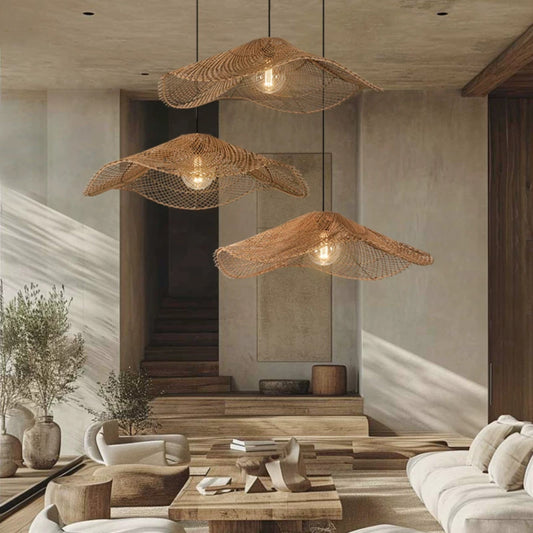
Hang an organic, free-form looping pendant to counteract rigid architectural lines with natural fluidity. Continuous undulating curves soften the sharp angles of door casings, window mullions, and boxy sectional sofas, introducing a relaxed, open rhythm to the lounge. The asymmetrical silhouette shifts in perspective as you move through the space, offering a handcrafted feel that rigid geometric fixtures cannot duplicate.
This fluid profile thrives in Wabi-Sabi and organic modern living rooms rooted in raw textures and deliberate imperfection. Pair the fixture with natural stone coffee tables, rough-hewn exposed ceiling beams, and artisanal pottery to celebrate authentic material beauty.

Suspend an oversized paper lantern beneath high rustic timber rafters.
Zone the Room with Suspended Rings
Drop a suspended halo ring pendant over your seating group to establish a clear spatial boundary in open-concept floor plans. In combined living and dining layouts lacking interior walls, defining functional zones requires visual cues. A suspended circular ring casts a dedicated perimeter of light that frames your lounge area from above, functioning as an overhead counterpart to an area rug.
Center the suspended halo directly over your central coffee table rather than the room's geometric midpoint. Aligning the focal ring with your primary sofa and armchair arrangement concentrates illumination where conversations happen, keeping empty walkways pleasantly subdued.

Glowing halo rings anchoring a dramatic deep-blue lounge.
Balance Metal and Texture
Elevating your primary lounge space calls for substantial texture; suspending rattan hanging lights above low cocktail tables immediately sets a relaxed, welcoming hospitality vibe.
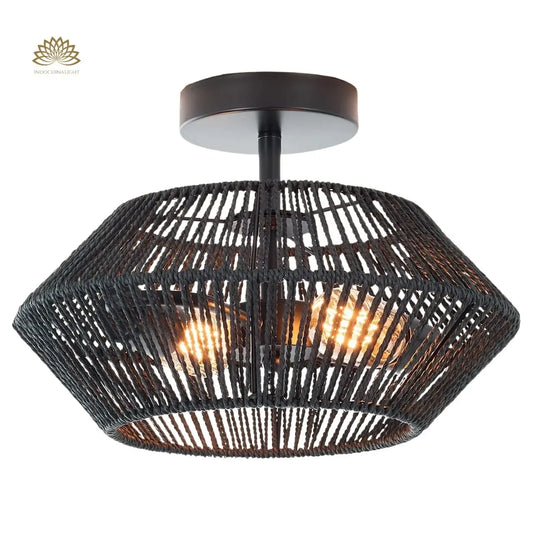
Pair a structured metal frame with a handwoven natural shade for balanced industrial warmth. The crisp metal chassis supplies architectural discipline and structural support, while woven natural fibers soften the fixture's visual weight with tactile warmth. This pairing bridges the gap between industrial edge and organic comfort without allowing either material to overpower the room.
This hybrid fixture suits modern farmhouse and urban loft spaces that juxtapose iron window frames with reclaimed timber furniture. Suspend this fixture over your seating arrangement to echo both dark architectural hardware and warm wood finishes in a single overhead statement.

Classic black chandelier centered under a vaulted beamed ceiling.
Revive Retro Charm with Globes
Pair an opal glass globe with an authentic brass gallery fitting to infuse your lounge with timeless mid-century character. The opaque milk glass globe diffuses bulb filament glare into a soft, consistent ambient glow that mimics vintage schoolhouse illumination. This reliable combination of clean spherical geometry and balanced light output delivers enduring appeal that transcends shifting decor trends.
Mid-century modern and eclectic living rooms provide the ideal architectural backdrop for classic globe fixtures. Rather than relying on a solitary central mount, suspend a symmetrical pair across the seating axis to broaden light coverage and create pleasing architectural symmetry.

Vintage pendant lighting a cozy terracotta-toned living room.
Highlight Details with Black Tracks
Install a matte black track lighting system with adjustable heads to direct focused accent light onto art and architectural features. Standard central ceiling fixtures wash the middle of the room while leaving perimeter gallery walls, stone fireplaces, and styled shelving in flat shadow. A slim matte black track lets you angle dedicated spotlight heads precisely where details deserve focus, framing perimeter elements while the track recedes into the ceiling plane.
Aim track heads toward walls at roughly a 30-degree angle rather than pointing them vertically down. This wall-washing technique highlights surface textures on brick or plaster while preventing blinding specular glare from bouncing off framed glass artwork.

Black track lights spotlighting colorful artwork and fireplace decor.
Indulge in Amber Ambiance
Opt for an amber-tinted glass pendant to bathe cool-toned living spaces in rich, candlelight warmth. The warm pigment embedded directly within the glass modifies the emitted light wave before it reaches the room, shifting even crisp LED output into a soothing, amber wash. The resulting atmosphere evokes the intimacy of an open hearth or candlelight, making the lounge instantly inviting after sunset.
Amber glass fixtures excel in bohemian, Scandinavian, and warm minimalist interiors dominated by cool gray paints or white walls that require thermal visual balancing. The colored glass balances the room's color temperature naturally without requiring specialized warm-dimming driver hardware.

Sculptural gold pendant glowing warmly in an amber living room
Scale Up for Soaring Ceilings
Install an oversized tiered chandelier or extendable-stem pendant to bridge massive vertical volume in high-ceilinged lounges. Standard compact fixtures in rooms with soaring or vaulted ceilings float helplessly near the roofline, stranding seating arrangements in under-lit gloom. A multi-tiered fixture or a commanding oversized shade dropped on an extended stem fills the vertical volume, connecting overhead architecture directly to human eye level below.
Assess maintenance and relamping access before mounting fixtures on soaring ceilings. Choose long-life LED bulbs rated for 25,000 hours, and confirm your ladder reaches the canopy safely, so your dramatic fixture stays easy to service through years of daily use.

Massive black drum pendant commanding a double-height vaulted hall.
Keep It Close in a Compact Lounge
Mount a broad, shallow flush fixture in a compact lounge to open up walking clearance and maximize perceived room volume. Bulky hanging pendants in tight living rooms dissect sightlines and make low ceilings feel suffocating. A wide-diameter flush mount with a shallow profile spreads light laterally across the entire ceiling drywall, eliminating dark upper shadows and making the compact room appear visually taller and more open.
Select a shade material slightly lighter than your ceiling paint color. A dark, heavy fixture mounted against a low white ceiling reads as an imposing dark void, whereas a pale, reflective shade blends quietly into the architectural surface.

Vintage pendant hanging centered over a vibrant cozy sitting nook.
Work Around a Missing Ceiling Void
Rely on surface-mounted ceiling channels or swagged pendants when your lounge lacks a hollow ceiling void for recessed cans. In historic masonry apartments or modern concrete builds, carving openings for recessed downlights requires costly false soffits. Surface-mounted junction tracks, ceiling-hugging spot channels, and upward-projecting wall sconces deliver multi-layered light without cutting into the structural ceiling slab.
Use ceiling swag hooks if you rent or need to reposition your fixture. Anchoring a decorative hook into the ceiling lets you drape a plug-in pendant cord directly over your coffee table, avoiding off-center junction boxes without electrical work.

Low-profile saucer ceiling fixture mounted beneath open painted rafters.
Cluster Several Pendants at Staggered Drops
Group a cluster of small pendants at staggered hanging heights to cover wide seating footprints with balanced visual rhythm. In open-plan living rooms or spacious lounge areas, a single central fixture often looks undersized and isolated. Suspending three to five compact pendants on staggered cords from a shared multi-port canopy creates a unified sculptural canopy, spreading light evenly across the entire seating arrangement.
This cascading configuration excels in Scandinavian and organic modern spaces. Varying the drops by 4 to 6 inches (10 to 15 cm) between shades creates dynamic visual movement while bringing focused, comfortable task light down to intimate eye level.

Cascading globe cluster pendant centered in a coffered-ceiling room.
4 Pro Tips for Styling Lounge Ceiling Lights
To style lounge ceiling lights effectively, anchor the fixture over your seating group, coordinate metal finishes with room hardware, balance ceiling paint contrast, and proportion the shade diameter to your sofa width:
- Center your light over the seating group, not the room's geometric center: an offset greater than 12 inches (30 cm) from the coffee table or sofa centerline is immediately noticeable and leaves the furniture grouping feeling disconnected.
- Coordinate fixture metal with existing architectural hardware: pair brass fixtures with brass door levers, window hardware, or curtain rods to weave metallic cohesion throughout the space.
- Use ceiling paint contrast to govern fixture visibility: a dark bronze fixture against a crisp white ceiling creates a sharp architectural silhouette, whereas that same fixture on a dark ceiling visually blends into the plane.
- Proportion fixture diameter to your largest furniture piece: select a ceiling light measuring roughly half the width of your main sofa, ensuring visual balance without overwhelming seated guests.
How to Choose the Right Ceiling Light for Your Lounge?
Select your lounge ceiling light using four core measurements: fixture diameter calculated from room dimensions, hanging drop based on walking clearance, target lumens based on square footage, and layered circuit control.
Use the reference sizing table below to quickly find the recommended fixture diameter for your space without manual calculations:
Lounge Size |
Room Length + Width |
Recommended Fixture Diameter |
8 x 10 ft (2.4 x 3.0 m) |
18 |
16 to 18 inches (41 to 46 cm) |
10 x 12 ft (3.0 x 3.7 m) |
22 |
20 to 24 inches (51 to 61 cm) |
12 x 14 ft (3.7 x 4.3 m) |
26 |
24 to 28 inches (61 to 71 cm) |
14 x 18 ft (4.3 x 5.5 m) |
32 |
28 to 34 inches (71 to 86 cm) |
16 x 20 ft (4.9 x 6.1 m) |
36 |
32 to 38 inches (81 to 97 cm) |
Calculating the correct fixture diameter is straightforward: add your room length in feet to your room width in feet, then convert that sum to inches to find your target fixture diameter. For example, a 12 x 14-foot lounge equals 26, calling for a 26-inch (66 cm) fixture. When positioning a light directly above a coffee table, size the fixture diameter to approximately two-thirds of the table's width to preserve visual balance.
Beyond fixture diameter, balance your lounge lighting scheme across these three technical installation criteria:
- Hanging height and walking clearance: maintain at least 7 feet (213 cm) of clearance from the finished floor to the bottom of the fixture along all walking paths. Directly over a coffee table with no foot traffic underneath, you can safely lower the fixture to 6.5 feet (198 cm). On ceilings higher than 8 feet (244 cm), add roughly 3 inches (8 cm) of fixture drop for every additional foot of ceiling height.
- Illumination levels and color temperature: living rooms require 10 to 20 lumens per square foot (IES residential standard), totaling 2,000 to 4,000 lumens across all light sources for a typical 200 sq ft space. Choose warm white bulbs rated at 2700K to 3000K with a color rendering index of CRI 90 or higher, and always install a dimmer switch so you can dial down output from daytime gathering to evening relaxation.
- Layered circuit distribution: layer three independent light sources: ambient overhead illumination, eye-level task lighting, and perimeter accent lighting. Any living room larger than 150 sq ft functions best when each layer operates on its own dedicated wall switch or smart circuit.
Frequently Asked Questions About Lounge Ceiling Lights
Here are quick answers to the questions people ask most often when choosing a living room ceiling light.
Are Ceiling Lights Suitable as Primary Lounge Lighting?
Yes, ceiling lights can serve as effective primary ambient illumination, provided you pair them with floor and table lamps to eliminate shadows in perimeter corners. Relying on a single central fixture leaves corners dark and washes the room in flat light.
Can Ceiling Lights Replace Floor Lamps in Lounges?
No, ceiling lights cannot fully replace floor lamps in a lounge because overhead fixtures provide general ambient wash while floor lamps deliver targeted task light at eye level. Floor lamps bring warmth down to seated reading height where overhead fixtures cannot reach comfortably.
What Ceiling Height Is Ideal for Lounge Lights?
Standard 8-foot (244 cm) ceilings work best with flush or semi-flush mounts, maintaining the required 7-foot (213 cm) floor clearance along walking paths. For ceilings of 9 feet (274 cm) and above, hanging pendants and multi-tier chandeliers have ample vertical clearance to shine.
How to Safely Install Ceiling Lights in Lounges?
Always turn off power at the main breaker box before handling wires, confirm the ceiling junction box supports the fixture's weight, and hire a licensed electrician for new wiring. Verifying box load ratings prevents heavy chandeliers from sagging or pulling free from ceiling joists.
Are LED Lights Best for Lounge Ceiling Fixtures?
Yes, LED bulbs are best for lounge ceiling fixtures, as long as you choose dimmable models rated between 2700K and 3000K with a CRI of 90 or higher. High-CRI LED bulbs last up to 25,000 hours while rendering furniture wood tones and natural woven textures with rich, authentic depth.
Woven rattan and bamboo shades filter overhead illumination into soft, organic patterns that solid metal or glass fixtures cannot replicate, introducing tactile warmth to modern, Japandi, and coastal living rooms. Every IndochinaLight pendant shade is handwoven in Phu Vinh, a traditional Vietnamese craft village renowned for centuries of rattan artistry, harvested in the autumn when fiber density peaks and treated with chemical-free methods that preserve authentic fiber strength and golden color.
From my experience growing up in Phu Vinh and working in interior architecture, handcrafted shades bring unique character and enduring quality that mass-produced factory fixtures never achieve. Explore our rattan and bamboo pendant collection to find the perfect handcrafted shade for your lounge, or consult our design team for personalized sizing and placement recommendations.