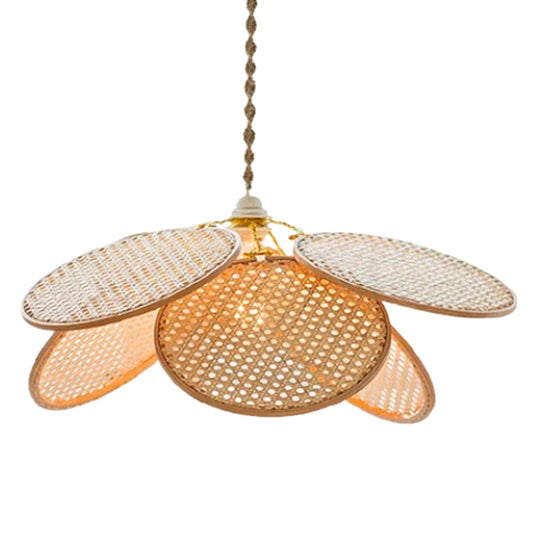
Wondering if rattan lights are in style for 2026? The answer is YES. This natural material has moved past trend status and settled into modern homes for good.
This guide covers five things: how to choose the right fixture, what to pair it with, how it adapts across design styles, how to apply it room by room, and finally, the technical rules for placement and hanging. By the end, you will know exactly how to make a rattan light work in your space.
You might hesitate before buying one.
– Will it clash with your existing furniture?
– Will it look dated in a few years?
Those are fair questions, and the weave, shape, and finish you pick will answer both.
Choose the Right Rattan Light Before You Style It
Before pairing or placement even comes into play, the fixture itself has to be right. Five factors determine whether a rattan light suits a room well: size, weave density, shape of shade, color finish, and cord and hardware. Work through them in that order, from the biggest structural decision down to the smallest detail.
-
Size: Your pendant's diameter should be between 1/3 and 2/3 of the width of the table or island below it. Skip this rule, and an undersized fixture will float, looking lost in a large room instead of anchoring it.
-
Weave density: This one detail controls how much light passes through and how strong the shadow pattern becomes. A tight weave gives you a soft, even glow. An open weave casts a bolder, more dramatic shadow across the walls and ceiling.
-
Shape of shade: The shape limits your hanging options more than you might expect. A wide dome needs more vertical clearance than a narrow cone, so pick the shape with your ceiling height already in mind.
-
Color finish: Match the rattan tone to your existing wood furniture for a calm, unified look. Or contrast it against darker or painted furniture to turn the fixture into a deliberate focal point.
-
Cord and hardware: The cord and hardware finish, whether black, brass, or a natural fiber wrap, should echo a metal finish that's already in the room. Don't introduce a new one just for the light.

Once you've picked the fixture, the next step is deciding what surrounds it.
What to Pair with Rattan Lights?
Rattan pairs well with more than just wood. Some materials soften it further. Others contrast it on purpose, and the choice you make changes the whole feel of the room.
Soft Neutral Wall Colors
A warm white, sand, greige, or soft taupe wall keeps rattan from clashing with its surroundings. That quiet backdrop lets the fixture's warm tone and shadow pattern read as the room's textural highlight rather than competing with the wall color. A busy or saturated wall will pull attention away from the very shadow play you bought the light for.
 A round woven rattan pendant light in a neutral-toned room
Natural Wood Furniture & Tones
Wood is the next material to reinforce the palette of your newly set-up walls. The tone doesn't need to match the rattan exactly. Oak, ash, and light walnut all work fine. Wood shares rattan's organic grain and natural imperfections, so it reinforces the same material story rather than repeating the same look twice.
One caution: avoid pairing rattan with more than one other heavily grained wood species in the same sightline. Stacking too many grains competes for attention.
 A wavy rattan pendant shade blending into a rustic wooden wall
Indoor Houseplants
Greenery isn't just decorative filler. It does a job related to wood, but distinct from it. Plants bring the one living organic texture into the pairing, and that pushes the whole vignette toward the biophilic feeling the light is already creating through its shadow pattern.
1 to 2 plants near the fixture are enough. Any more competes with the light instead of supporting it. Trailing or broad-leaf plants work best, since their shapes echo the organic irregularity of the weave.
 A natural cone wicker pendant light in a room filled with greenery
Matte Black Hardware & Accents
Black doesn't clash with something this warm and natural. It's the deliberate pivot from softening rattan to contrasting it. The finish matters here just as much as the color: a matte surface won't compete with rattan's diffused, non-reflective glow, while a glossy or chrome finish will clash with the soft shadow pattern rattan creates. Try matte-black switch plates, door hardware, or a black metal side-table frame near the fixture.
 Set of 3 tracking drum rattan pendant lights hanging over a matte black table
Complementary Woven Decor as Jute Rugs, Baskets & Cane
You can mix rattan with other woven textures in the same room. Woven baskets, jute rugs, and cane furniture all repeat the woven motif, tying the space together around a single recurring texture. But there's a limit. Stack too many textured natural materials in the same sightline, and you get visual competition instead of cohesion. Cap it at two woven elements per room beyond the fixture itself.
 Globe rattan light shade in a warm-toned room with woven decor
If you're styling a cozy nook or smaller room where keeping things light is key, choosing a small basket pendant light lets you introduce that warm, organic texture while easily keeping the rest of your decor balanced.
With your fixture and pairings settled, let's see how they adapt to your home's specific design style.
How to Style Rattan Lights by Design Style?
Rattan lights aren’t limited to beach houses. They adapt to almost any interior style you already have. But you can't just drop any rattan light into a room and expect it to fit. You need to choose the right weave, shape, and hardware for the fixture itself, and that's what the next four sections break down.
Choose Airy Rattan Pendants for Coastal & Beach House Style
Choose oversized dome or bell-shaped pendants with an airy, open weave in bleached, whitewashed, or light natural rattan tones. This look needs air to move through the fixture, not just light.
The open weave keeps the fixture from looking visually heavy. It mimics the breezy, effortless feel of a beach house by letting light and air pass through freely instead of blocking them.
Pair this light with light-reflecting color palettes and soft linen slipcovers. That combination lets the airy rattan serve as a warm, organic highlight without overpowering the room's bright, open atmosphere.
 Courtland Blue Rattan Pendant Lights over Coastal Kitchen Island
Mix Heavily Textured Rattan Lights into Boho Chic Decor
Embrace heavily textured, chunky weaves, fringed edges, or tiered and layered rattan shapes here. Darker stains, mixed-tone rattan, and beaded details all work exceptionally well.
Boho thrives on a more-is-more philosophy and handmade charm. The fixture should look intentionally unpolished and highly tactile, not perfectly symmetrical.
Layer a heavily woven boho pendant alongside macrame wall hangings and trailing indoor plants. Unlike other styles, this one wants that layering. It builds a rich tapestry of global texture instead of a clean, isolated statement.
 Matador Extra Large Rattan Ceiling Light for Bohemian Living Space
Pair Minimalist Rattan Lights with Japandi & Wabi-Sabi
Opt for a tight, flawless, uniform fine weave in pale ash or natural tones. Stick to minimalist, geometric silhouettes, such as a perfect globe or a smooth, shallow dome.
Japandi design demands clean lines and real restraint. The rattan fixture needs a structured, disciplined shape, not an overly rustic or chaotic one.
Keep the surrounding space utterly simple, with plain matte ceramics and little else. That isolation is what turns the subtle variation in a tight rattan weave into the room's single, intentional touch of wabi-sabi imperfection.
 Pattranan Rattan Bamboo Pendant Lights over Wabi Sabi Dining Table
Choose Sculptural Rattan Fixtures for Organic Modern Interiors
Look for sculptural, asymmetrical rattan, or elegantly curved wicker shapes. Black-stained rattan looks striking here, and so does natural rattan suspended from stark, matte-black or brass hardware.
Sharp, modern metal hardware grounds the earthy rattan. It bridges the gap between raw natural material and sleek, contemporary design, which is exactly what this style is built on.
Use the round wicker pendant light as a deliberate focal point against smooth plaster walls and low-profile furniture. Organic texture and sleek modernism don't clash here. They enhance each other.
 Palma Wicker Rattan Round Pendant over Organic Modern Bedroom
Room-by-Room Decorating with Rattan Lights
Style sets the palette for the fixture, and the room itself determines how that light is actually placed.
Your chosen design style dictates the materials in the room. The room's actual function dictates the fixture's size, height, and lighting needs.
Kitchen island
A rattan pendant over your island does more than light the counter. It softens the kitchen's inherently hard surfaces. The organic texture contrasts beautifully with cold, sleek materials like quartz or marble, and it pairs just as well with matte black or brass cabinet hardware, injecting warmth into a space that's usually all straight lines and metal appliances.
Hang two large pendants or three medium, tight-weave pendants 30 to 36 inches above the counter. A tight weave is far easier to wipe clean of cooking grease, and this height allows food prep to be seen without blocking conversation across the island.
 Beatrice White Rattan Pendant Lights for Kitchen Island
Browse our rattan pendant lights for kitchen islands for pieces already sized and shaped for island counters like this one.
Bedroom
Rattan lighting turns a bedroom into a calming retreat through soft, diffused ambient light. The woven fiber harmonizes with layered textiles like linen bedding and upholstered headboards, and it ties in beautifully with warm oak or walnut nightstands, building a tactile, earthy space built for rest.
Drop small, tight-weave rattan pendants 20 to 24 inches above the nightstands on both sides of the bed. That frees up bedside table space entirely for books and essentials, while giving you focused, glare-free light for reading in bed.
 Ritta French Country Rattan Petal Pendant Light for Bedroom
Shop our collection of bedroom rattan pendant lights for small, tight-weave pairs made to flank a bed.
Dining table
Position the rattan fixture as the visual anchor of your dining space. It defines the eating area with an intimate, inviting glow. The rustic yet elegant texture complements a heavy, solid teak or farmhouse-style wood table and pairs naturally with handmade ceramic dinnerware and neutral linen table runners, grounding the whole vignette.
Hang one oversized, loose-weave pendant centered 30 to 36 inches above the tabletop. The loose weave casts a captivating shadow play across the ceiling as the evening goes on, and the oversized scale ensures the table feels properly anchored beneath it.
 Umbrella Rattan Round Pendant Light for Dining Room
Explore our rattan pendant lights for dining rooms, fixtures built to anchor a table exactly this way.
Living room
A rattan fixture acts as a striking centerpiece in a living room. It provides broad ambient light, making a large space feel cohesive. Its airy, woven structure balances the heavy visual bulk of a slipcovered sectional or a thick leather sofa, and it ties together other organic elements in the room, such as jute area rugs and large potted plants.
Install a large, open-weave rattan chandelier with a minimum clearance of 7 feet from the bottom of the fixture to the floor. That height keeps tall guests from bumping their heads, and the open weave keeps a massive fixture feeling weightless instead of overpowering the room.
 Cattleya Boho Rattan Ceiling Light for Living Room
See the rattan pendant lights for living rooms collection for statement pieces sized for open floor plans.
Now that you know exactly which light fits your style and your room, there is only one step left: hanging it correctly.
Tips for Placement, Hanging Height, and Grouping Rattan Lights
Placement comes down to three separate decisions, not one: where the fixture sits in the room, how high it hangs, and whether it stands alone or in a group. Get these three right, and the size and shape choices you already made will actually work in the space.
Placement Tips
-
Surface alignment: Center the pendant over the table, island, or seating area it lights. That alignment gives the room a clear anchor instead of a random glow floating in midair.
-
Wall and cabinet clearance: Keep at least 12 inches between the fixture's widest point and any wall or cabinet edge. That gap keeps foot traffic and sightlines clear as people move past it.
-
Multi-purpose room rule: In a shared space, let the primary activity underneath decide the placement. That keeps the light functionally tied to that zone rather than centered on the room for no reason.
 Placement Tips for Rattan Lights | AI-Generated: Gemini
Hanging Tips
-
Table and island height: Hang the fixture 30 to 36 inches above a dining table or island. That range keeps the light close enough to feel intimate without blocking eye contact across the table.
-
Open living area clearance: Leave at least seven feet of clearance from the floor in open rooms. Nobody should have to duck or walk around your pendant.
-
Ceiling height adjustment: Raise the hanging height by 2 to 3 inches for every additional foot of ceiling height. That keeps the fixture's proportion correct instead of making it look lost in the space.
 Hanging Tips for Rattan Lights | AI-Generated: Gemini
Grouping Tips
-
Odd number clusters: Group pendants in groups of 3 or 5, not pairs. Even-numbered groups read as a rigid, catalog-like, matched set rather than something natural.
-
Staggered versus level heights: Stagger the cluster for energy and movement. Keep it level for a calmer, more formal look. Pick whichever mood the room actually needs.
-
Cord management: Tuck the cords, or match them to the ceiling color, so a staggered cluster still looks intentional rather than unfinished.
 Grouping Tips for Rattan Lights | AI-Generated: Gemini
FAQs About Rattan Lights Styling
Are rattan lights in style in 2026?
Yes, rattan lights are highly in style in 2026. Rattan lighting isn't a passing trend. It has cemented itself as a permanent, durable design staple. The shift toward biophilic design and natural, tactile materials has stayed consistent across the industry for years now, not just one season.
How to care for rattan lights so the style lasts?
Dust the fixture weekly with a soft microfiber cloth or a dry brush, and keep it out of damp bathrooms. Preserving its color and structure is what keeps it complementing your room's palette the way it did on day one.
High humidity and moisture are the real threats that warp rattan, though prolonged direct sunlight will fade its natural color over time.
What is the trend in rattan lampshades in 2026?
The current focus sits on highly sculptural, asymmetrical silhouettes. You can see exactly what this looks like in our roundup of the best unique rattan light designs in 2026. Expect to see fixtures that mix raw rattan with sharp modern metal frames and ultra-tight weaves in matte black or pale ash. These are shape and finish trends specifically, distinct from the lasting-style question above.
What color temperature bulb looks best in a rattan fixture?
A cool white bulb will flatten the natural golden tones of rattan and wash out the shadows it's designed to create. Use a warm white LED bulb at 2700K-3000K instead to enhance its organic warmth. LED bulbs also run much cooler than incandescent bulbs, which helps prevent the natural rattan from drying out and cracking over time.
Can I use rattan light fixtures outdoors or on a patio?
No, not natural rattan. A standard covered patio blocks rain, but not ambient humidity or moisture splashback, and that's enough to damage it over time. Keep natural rattan strictly indoors or in enclosed sunrooms. For an exposed outdoor patio, buy a synthetic, weather-resistant poly-rattan fixture that mimics the look while actually withstanding the elements.
Are rattan lights appropriate for rooms with low ceilings?
Yes, as long as you maintain a strict 7-foot clearance from the floor to the bottom of the fixture, to avoid head bumps. Scale the light to the room size, as you would in the living room section above. Swap tall domes or tiered chandeliers for flush mounts or wide, shallow drum shades to save vertical space.
Do rattan lights cast distracting shadows, and how can I fix them?
Distracting shadows come from combining a very open weave with a clear, high-lumen bulb, which creates harsh zebra-stripe patterns on the walls. Switch to a frosted LED bulb to instantly soften and diffuse the pattern, or choose a tighter-weave shade that blocks direct glare and casts a smooth, ambient glow instead. It comes back to the same weave density decision you made when picking the fixture in the first place.
Final Thoughts
Rattan pendant lighting rewards a little planning. Get the size, weave, and finish right, pair it with materials that either soften or contrast it on purpose, and hang it at the height your room actually needs. That's the whole system, whether you're lighting a coastal living room or a Japandi bedroom.
At IndochinaLight, every fixture is handcrafted from natural rattan, bamboo, hemp, and jute by Vietnamese artisans, using eco-friendly, chemical-free processes from start to finish. Since 2019, that craftsmanship has been the whole point: building a sustainable, tactile piece for your home while supporting the people who weave it by hand.
If you have questions about choosing or caring for a rattan fixture, we're happy to help you find the right piece for your space. Reach out at:
IndochinaLight - IndochinaHomeDecor LLC
-
Address: 30 N Gould St Ste. N, Sheridan, WY 82801
-
Phone: (+1) 307 249 0594
-
Email: service@indochinalight.com